

Launching an offer, a product or a service, and wondering where to start? This case study shows, step by step, how to go from an idea to a clear launch strategy, then how to adjust it after launch.
Context
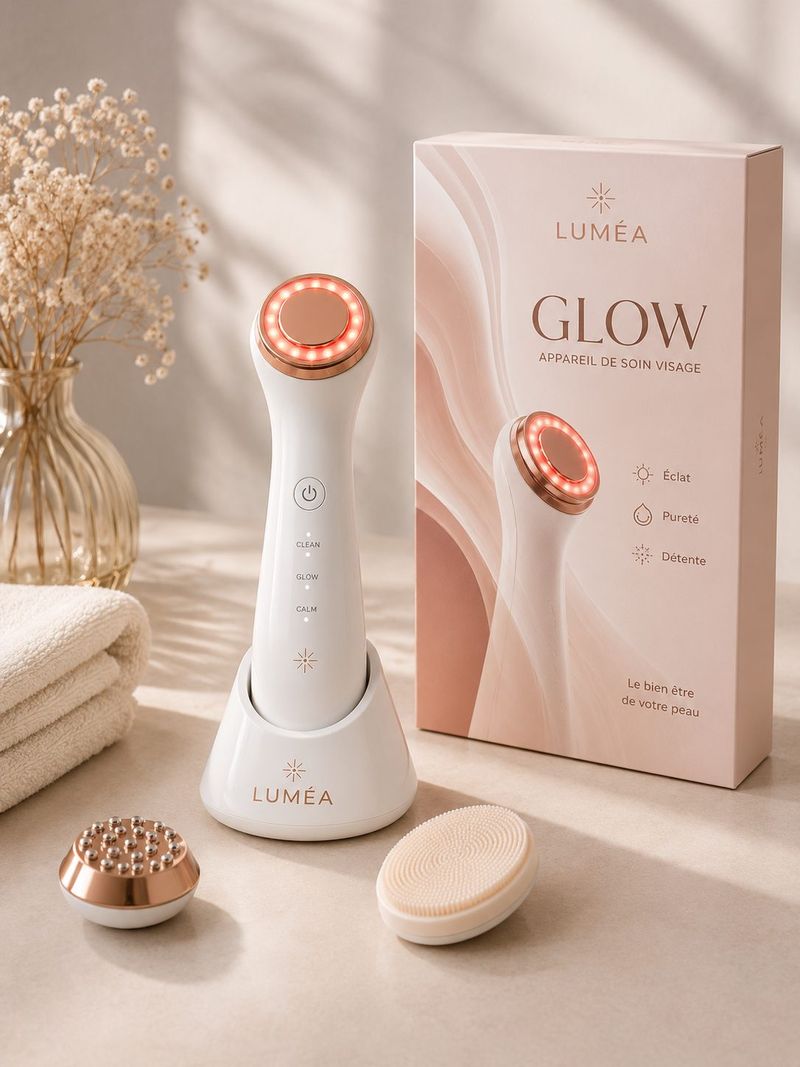
LUMÉA is preparing the launch of GLOW, an at-home facial care device. Its ambition: to make technology-based skincare more accessible and easier to fit into everyday life.
The challenge: how do you position a new at-home facial care device in a market that is already competitive?
Why Cap Marketing: the company doesn't need a one-off opinion. It needs a complete roadmap for its launch, and an outside perspective to adjust course once the product is on the market.
Step 1 — The diagnostic: understanding the market and finding its place
The first step is to analyse the market, the competition and the target before making any decision.
The market. The at-home beauty device market combines technological innovation, skincare expertise and a search for convenience.
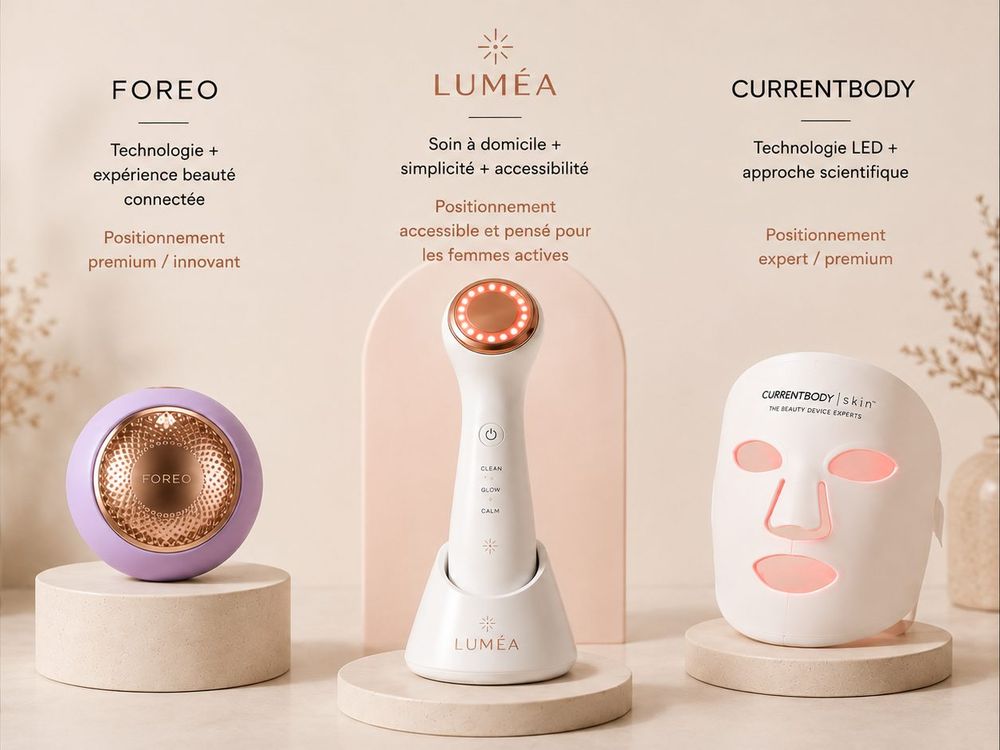
Competitive benchmarks. Two players serve as references:
- FOREO, a universe built around innovation and beauty devices;
- CurrentBody, a positioning focused on skincare technologies and beauty expertise.
The intended target. Working women who want to take care of their skin but have little time to go to a beauty salon regularly.
The opportunity identified. Rather than competing on technology alone, GLOW can stand out through ease of use, personalisation and fitting skincare into daily life.
The chosen positioning. GLOW, a practical at-home skincare solution combining technology, simplicity and personalisation. Three differentiation pillars follow:
Simplicity
Designed for everyday use.
Accessibility
An alternative to regular salon treatments.
Personalisation
Several programmes to adapt the routine to each user's needs.
Step 2 — Priorities and action plan
Once the positioning is set, you need to decide where to focus efforts and in what order.
The strategic priority. Build a clear value proposition, consistent with the target and distinctive enough to stand out from existing players.
Communication levers, from first contact to purchase:
- Social media (Instagram and TikTok): build awareness and show the product in use with content tailored to the target.
- Digital advertising (social ads): increase visibility and attract an audience likely to be interested.
- Retargeting: re-engage visitors who have already shown interest, to support them in their decision.
- Email marketing (newsletter): present the product, support the launch and nurture the relationship with prospects and customers.
The goal: a consistent journey from discovery to consideration to conversion.
The launch calendar, in six stages
D-21
Build anticipation
First teasers on Instagram and TikTok to spark curiosity.
D-14
Introduce the product
Content creators speaking about it and presentation of GLOW's benefits.
D-7
Prepare the launch
Communication to a targeted audience and invitation to discover the concept in preview.
D0 to D+7
Encourage discovery
Product highlights and demonstrations to encourage trial.
D0 to D+30
Encourage engagement
A participatory campaign around the product experience, to stimulate conversation and visibility.
D+30
Assess the first results
Tracking of key indicators (awareness, traffic, engagement, sales).
Step 3 — The handover: a ready-to-use roadmap
At the end of the 4 weeks, LUMÉA has a concrete roadmap for its launch. The personalised handover covers:
- the diagnostic of positioning and marketing challenges;
- the priorities and strategic directions chosen;
- the marketing action plan, prioritised and realistic;
- the implementation calendar, adapted to the company's resources.
It is the opportunity to explain each recommendation, answer questions and check that the team can apply the plan.
Step 4 — After launch: two follow-up meetings
A plan can only be judged once it meets reality. The two Cap Marketing follow-up meetings are used to read the first signals and adjust priorities, without starting from scratch.
Follow-up meeting #1 — around D+7, at the end of the first launch week
Goal: check that the launch reaches the right people with the right message.
- Does the audience reached match the intended target?
- Are the key messages (simplicity, accessibility, personalisation) understood?
- Which content and channels generate the most reactions?
Examples of possible adjustments: put more emphasis on demonstrations if product use remains unclear, or revise ad targeting if the audience drifts from the target.
Follow-up meeting #2 — around D+30, the first review
Goal: measure the first results and decide what comes next.
- Review of the key indicators set in the plan: awareness, traffic, engagement and sales.
- Analysis of the discovery, consideration, conversion journey: at which stage do prospects drop off?
- Prioritisation of actions to reinforce, correct or drop.
LUMÉA leaves with an adjusted roadmap for the following weeks.
What Cap Marketing brings
- A clear view of the market, the competition and the space to claim.
- Decided priorities, instead of scattered actions.
- A realistic action plan and calendar, adapted to the company's resources.
- An outside perspective after launch, to adjust without starting from scratch.
Strategic advisory services. Content production and day-to-day operational management are not included by default.
Preparing a launch or looking to structure your marketing?
Let's talk about your project during a free discovery meeting.